Old Wives' Tales for a Hard Winter: A Checklist of Signs to Watch This Fall
By early October the reports start coming in. Someone's uncle has found a woolly bear with barely any brown on it. A neighbor cut open a persimmon seed and got a spoon. The squirrels, according to a woman at the hardware store, are working like they know something.
Folk winter forecasts are a mix of careful observation, wishful thinking, and the very human urge to read the season before it arrives. None of it replaces a forecast. But if you spend a fall actually looking at woolly bears, acorns, and persimmon seeds, you'll notice things you would otherwise walk right past — and you'll build a small local record more useful than any single prediction.
The Woolly Bear and Its Bands
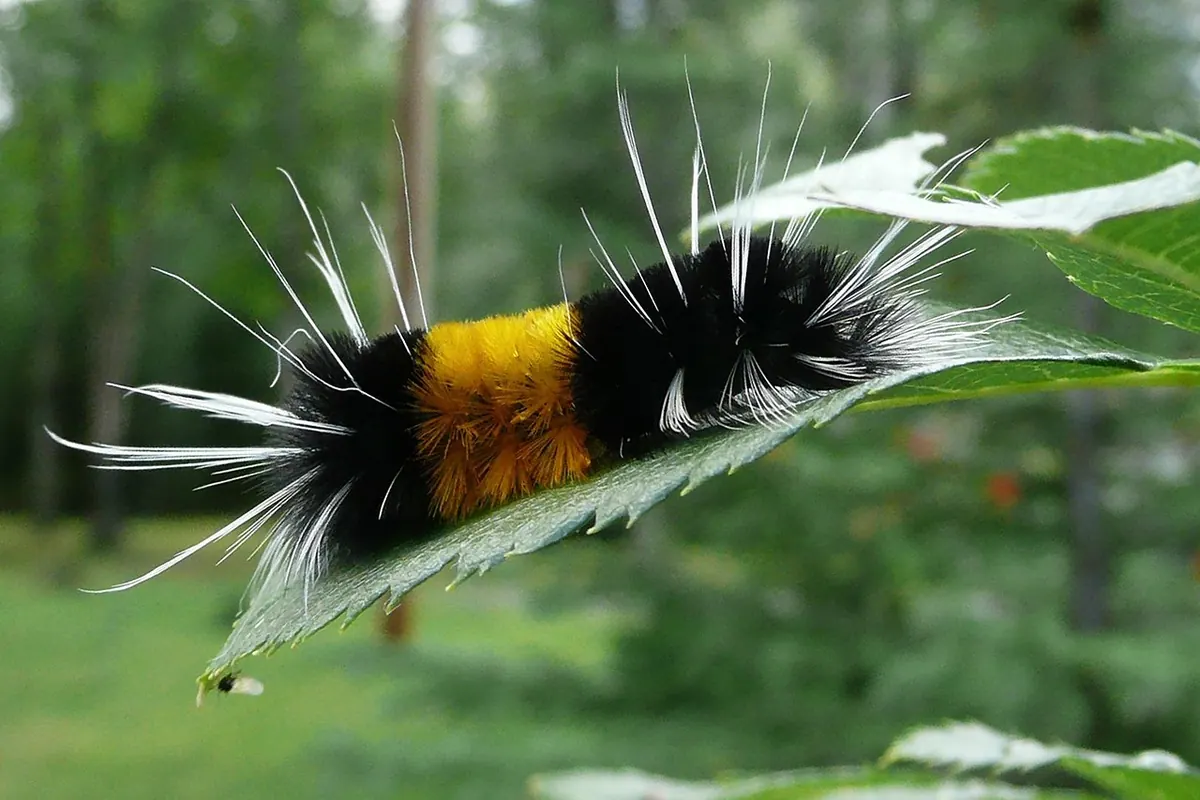
The woolly bear is the fuzzy, brown-and-black caterpillar you see crossing roads, driveways, and garden paths on mild afternoons. Look at the middle band: reddish-brown in the center, black at both ends. The familiar rule says a wide brown band means a mild winter and a narrow one means a hard winter. A variation holds that the black bands predict the severity of early winter and late winter, respectively.
Two things are worth knowing before you trust a single caterpillar. First, band widths shift as the caterpillar grows and molts, so a small one and a big one are not the same animal wearing a different forecast. Second, the woolly bear really does overwinter — it survives freezing solid in leaf litter and revives in spring, which is impressive biology but not weather prophecy.
So measure a dozen instead of one. Note the ratio of brown to black on each, average it out, and write the date and location beside it. Several small towns hold woolly worm festivals each October, where people do exactly this with more ceremony.
Persimmon Seeds: Spoon, Knife, or Fork
Cut a persimmon seed lengthwise, not across, and look at the white shape inside. Three results, three readings:
- Spoon — a shovel shape. Heavy, wet snow.
- Knife — a blade. Bitter cold and cutting wind.
- Fork — tines. A mild winter with light, scattered snow.
Here's the practical problem: seeds from the same fruit often disagree. So cut six or eight, lay them on a plate, and count. Most people report the majority shape and call it the year's verdict.
Folklore says the first frost sweetens persimmons. Ripeness is what actually removes the mouth-puckering astringency, so use soft, fully colored fruit — and if you're cutting seeds in September, you're reading unripe fruit either way. Persimmons grow across much of the South and Midwest; if you live where they don't, this sign simply isn't yours.
Acorns, Nuts, and the Squirrel Report
A heavy acorn crop is the most widely repeated hard-winter sign, and the easiest to check. Pick one oak, stand still for two minutes, and count what you crunch underfoot. Then count again in two weeks. What matters for the folklore is the size of the crop, not the calendar.
Squirrels do the rest of the reporting. Watch for:
- Nuts buried deeper than usual, or buried unusually early.
- Squirrels working from first light until dark without the usual mid-morning loafing.
- Unusually thick coats and bushy tails by late September.
- Nests built high in the canopy — which some people read as deep snow, and others as a mild winter that lets them stay above it.
That last contradiction is worth sitting with. You will hear the same sign reported in both directions depending on who's telling it and what winter they remember. And a mast year is mostly about the tree: oaks produce heavy crops on their own irregular cycle, driven by energy stores and the weather during pollination, not by what's coming in January.
Plants, Fog, and the Leaf Calendar
Onions and corn get consulted too. Thick, tight outer skins on a stored onion are said to mean a cold winter, as are thick husks wrapped close against the cob. An old New England saying counts fogs: for every fog in August, a snowfall to come. Others hold that trees dropping leaves early signal a mild winter, while leaves clinging late mean a hard one.
These are the loosest signs in the set, in part because leaf drop depends heavily on your first hard freeze. Still, they cost nothing to note, and they force you to look at trees you'd otherwise ignore.
Wasps, Bees, and Porch Spiders
Paper wasps and bald-faced hornets build their nests at different heights from year to year, and the folk reading is simple: high nests mean deep snow, low nests mean a mild one. Beekeepers watch for hives sealed early with extra propolis, and for bees clustering sooner than usual. Spiders, meanwhile, are said to spin larger webs and move indoors ahead of a cold one — which is also just what a spider does when the nights cool down.
One insect sign is genuinely measurable, though it isn't a winter forecast. Count cricket chirps for fourteen seconds and add forty; that gives you the air temperature in Fahrenheit. It's a thermometer, not a prophecy, but it's a nice way to keep your eye in.
Your Own Fall Checklist
The signs get more interesting when you keep score. Try this through October and November:
- Walk the same route once a week — half a mile is plenty.
- Record numbers, not feelings. Band ratio, acorn count, seeds per shape, nest height.
- Date everything, and note the temperature and whether it rained.
- Photograph the same tree, hedge, and nest in the same week each year.
- Write down the winter that followed, in March: ice days, snow totals, the coldest stretch.
Two honest cautions. These signs don't predict reliably — most of them track conditions that already happened, like a dry summer or a caterpillar's age. And they don't travel. A persimmon-seed tradition from the Ozarks means little in coastal Oregon, where persimmons won't grow anyway. After three or four years of notes, you'll know which signs hold up in your own patch of ground and which are just noise.
Keep the notebook regardless. The value of a sign was never the prediction. It's the looking.
Photo: ArtTower / Pixabay

You Might Also Like
Six familiar weather sayings, from red skies to thick onion skins, get checked against how weather actually works — and the short-range ones come out far better than the season-ahead ones.
Baking soda and baking powder leaven differently—one needs acid, the other brings its own. Here's when a swap works and when it ruins taste and texture.